
F-Theta Lens
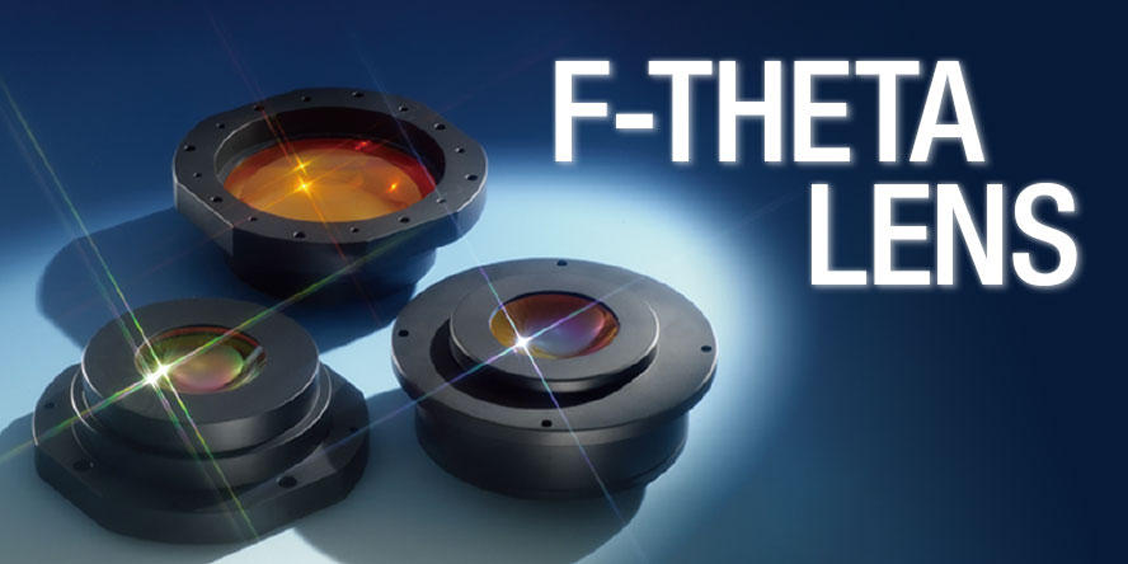
What is an F-Theta lens?
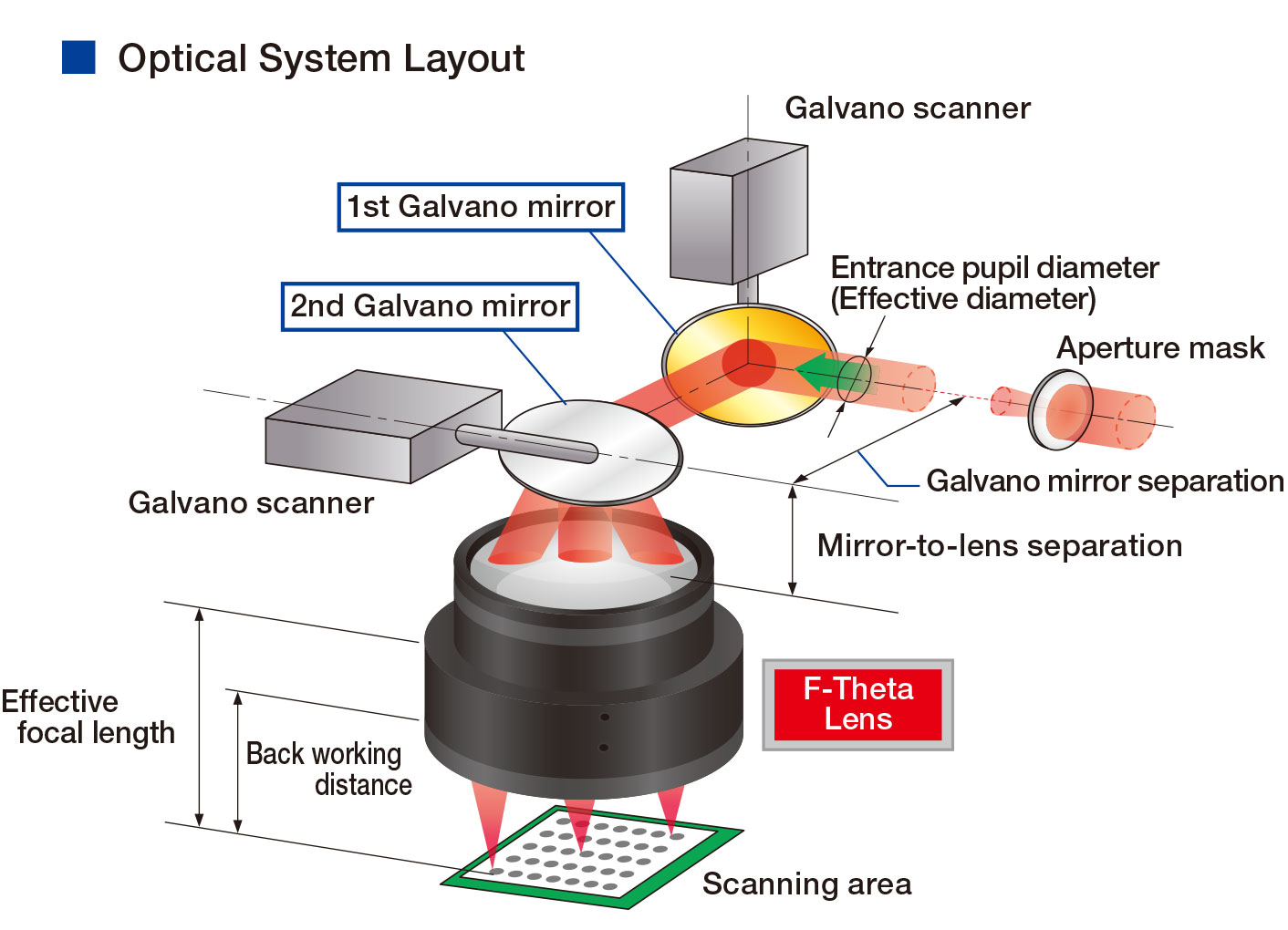
F-Theta lenses, also known as scan lenses or galvanometer lenses,are optical lenses designed to focus a laser beam scanned by agalvanometerscanner orpolygon scannerat a position determined by the product of the focal length (F) and the mirror swing angle (θ).
They are designed so that the relationship between the scanning angle and the focal position is linear, and are used for high-speed drilling of printed circuit boards, marking on electronic and plastic components, and microfabrication applications.
Key Considerations for Selecting F-Theta Lenses and Product Options
When selecting an F-Theta lens, it is necessary to comprehensively evaluate optical characteristics such as focal length, scan area, and focused spot size based on the laser type and required processing accuracy. Options include "standard products" and "custom-made products," which should be used appropriately depending on the equipment specifications and processing requirements.
Standard products offer the advantages of versatility and stable supply, allowing for smooth implementation if specifications match. On the other hand, in recent years, due to the diversification of processing targets and the advancement of laser performance, there has been an increase in cases where standard specifications cannot be met. Consequently, there is a growing need for custom solutions through individual design.
Key Information Required for Selecting an F-Theta Lens
When selecting an F-Theta lens, organizing the following points in advance will help ensure a smooth selection process.
- Type and wavelength of the laser to be used (e.g., CO₂/fiber, etc.)
- Required processing area and precision (focal length, scan area, spot size, etc.)
- Mounting specifications, working distance,and external dimensions
Structure and Materials of F-Theta Lenses
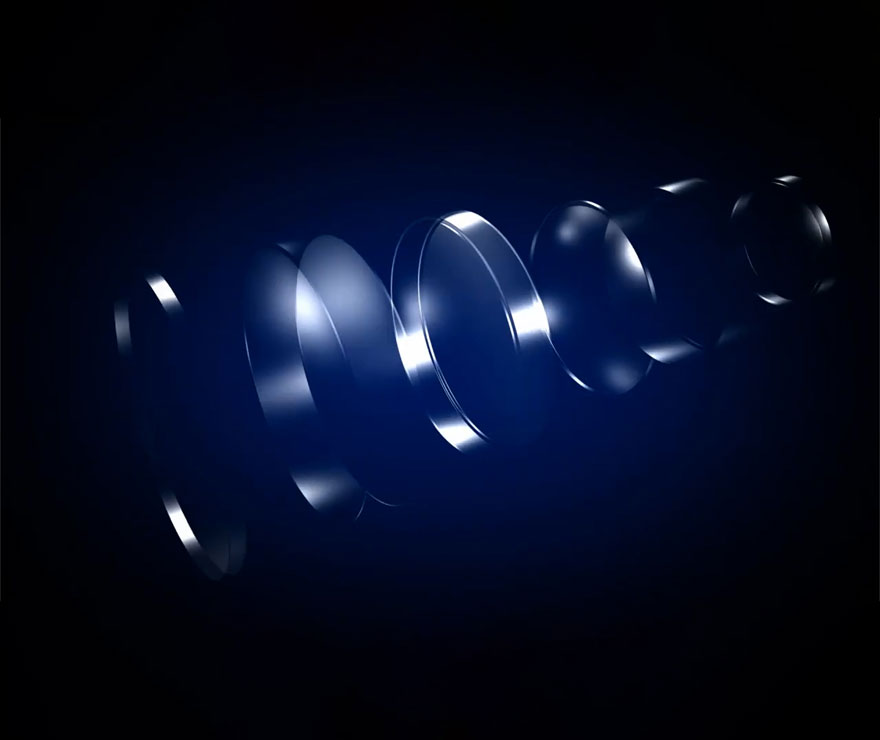
F-Theta lenses consist of multiple lenses, such as spherical and aspherical elements, and achieve uniform beam irradiation while maintaining a constant working distance across the entire scan area.
There are two types of structures available depending on the application.
- Telecentric type: This structure irradiates the beam perpendicular to the processing surface. It has minimal angular deviation due to positionand often offers good focusing characteristics,making it suitable for precision processing thatrequires high accuracy.
- Non-telecentric type: Used in applications prioritizing a wide scanning area.Sincethe irradiation angleis tilted, simple lenses are generally used in fields where machining precision is not a critical requirement.
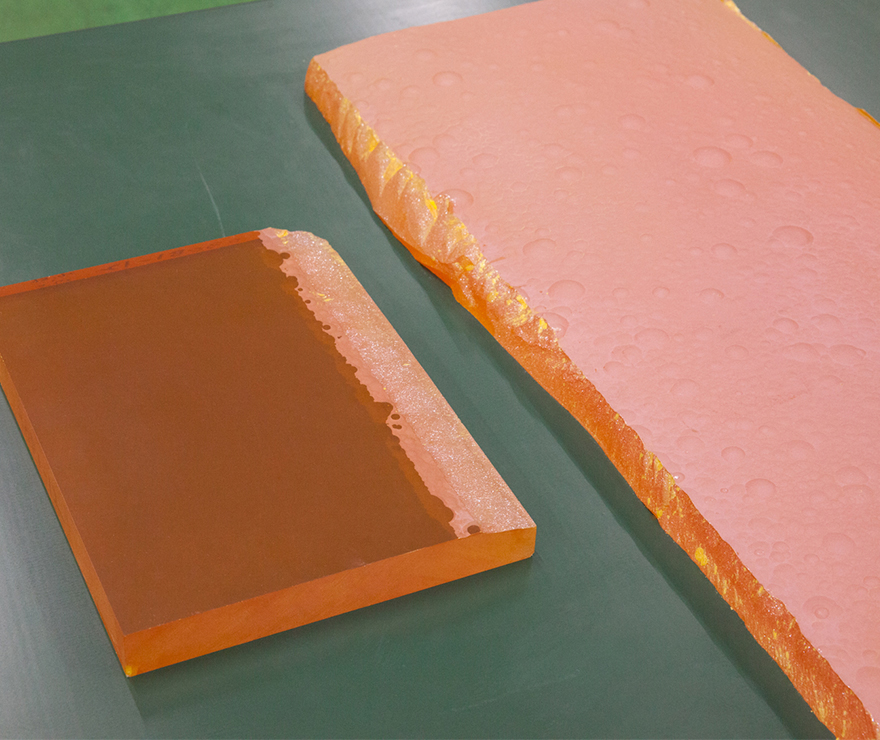
Materials usedincludeZnSe (zinc selenide), which is suitable for CO₂ lasers, andsynthetic quartz or optical glass (such as BK7), which aresuitable for fiber lasers. The choice depends on the application and wavelength.Furthermore, advanced processing and coating technologies compatible with these materials determine the performance of F-Theta lenses.
Why Sumitomo Electric’s F-Theta Lenses Are Chosen
Fully Customized Design to Meet Your Needs
Sumitomo Electric’s F-Theta lenses can be custom-designed to be individually optimized according to customer equipment specifications and processing applications. We analyze various optical characteristics—such as focal length, scan area, spot size, and telecentricity error (beam incidence angle deviation)—using optical simulation to propose the optimal specifications.
We also provide design consultation even before specifications are finalized and can propose comprehensive optical solutions, including DOEs (diffractive optical elements) and beam-shaping optical systems.We accommodate custom manufacturing starting from a single prototypeand can support customers with advanced optical analysis technology during the prototyping and verification phases of equipment development upon request.
High-Precision Machining and Stable Supply Achieved Through Integrated Domestic Manufacturing
Sumitomo Electric manufactures everything in-house in Japan, from the synthesis of ZnSe crystals to aspheric machining, AR coating, assembly, and inspection. As the only manufacturer in Japan capable of synthesizing ZnSe crystals in-house, we are able to provide high-quality F-Theta lenses.
For precision optical processing, we employ SPDT (Single Point Diamond Turning) aspheric processing technology to achieve nano-level processing accuracy and high-precision measurement. We support a variety of materials,including ZnSe and quartz, and can processshapesaccordingtodesign specificationswith high precisionwithin controlled tolerances. Furthermore, we provide comprehensive proposals ranging from material selection tailored to specific applications through to processing.
Furthermore, through advanced process control and in-house manufacturing, we minimize variations in the manufacturing process and can quickly identify causes and verify reproducibility even when issues arise. We support the supply of high-precision, stable lenses from the prototype and development stages of equipment through to mass production.
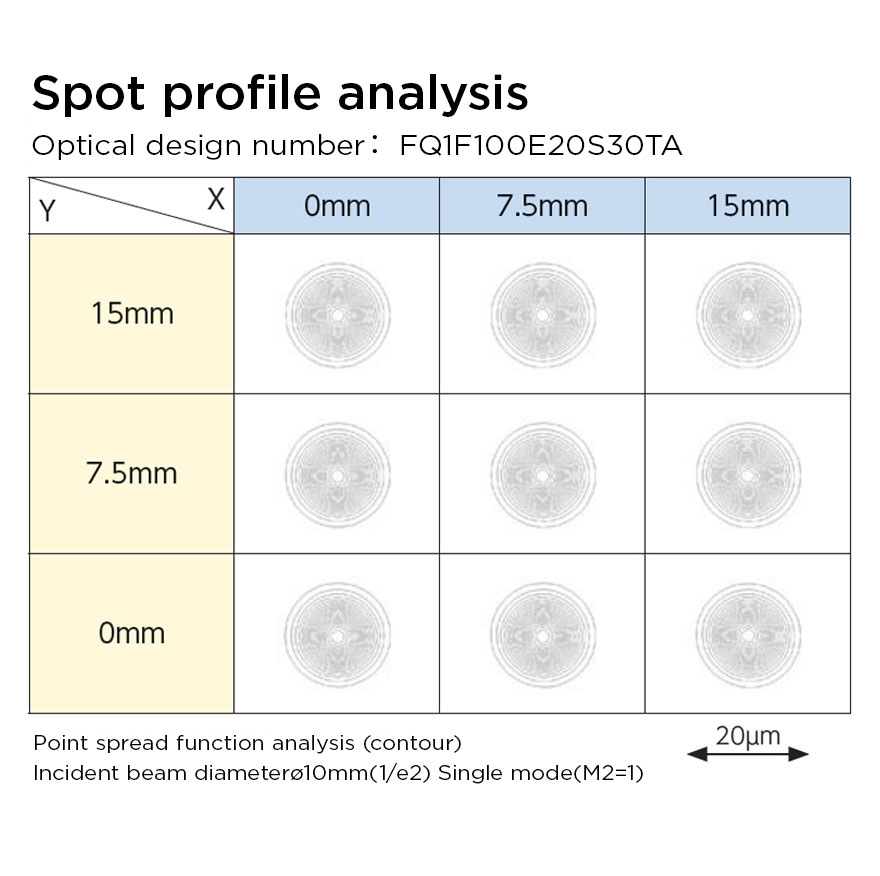
Achieves uniform focusing performance across the entire scan area
F-Theta lenses are required to maintain stable focusing performance not only near the center but also in the peripheral areas of the scan area when the beam scans across a single plane. Sumitomo Electric’s F-Theta lenses utilize aspheric design and wavefront aberration correction to ensure high levels of circularity, spot size, and beam intensity uniformity. In particular, the design ensures that spot size variation is kept within a few percent across the entire scan area.
Furthermore, for applications requiring telecentricity, the lenses support a telecentric design that allows the beam to be projected perpendicular to the optical axis, minimizing errors in hole diameter and machining distortion. These optical characteristicsare optimized based on a database derived from years of experience and proven results in the precision machining field,serving as a key factor in enhancing the overall machining accuracy of the equipment.
Domestic Reliability and Extensive Industry Track Record
Sumitomo Electric’s F-Theta lenses ensure high quality and long-term stable supply through domestic manufacturing, quality control, and support systems in Japan. Since we handle everything from design to manufacturing, inspection, shipping, and after-sales support entirely within Japan, we can provide rapid technical support in the event of any issues.
To date, we have a proven track record of successful implementation in fields requiring high-precision processing, such as semiconductors, electronic components, medical devices, and aerospace. We also have extensive experience in micro-processing applications, including laser drilling, and have long supported high-precision processing in equipment. As optical components that achieve both long-term stable operation and processing accuracy in demanding industrial applications, they are highly regarded by equipment manufacturers and processing sites.
Product Inquiry
Feel free to contact us for cutting and machining information
on cutting troubles and review of tooling as well as questions,
feedbacks, and requests for our home page.
Application Examples
Cutting
Fiber lasers and CO₂ lasers are used for cutting stainless steel sheets and aluminum parts. To ensure precise focusing, Sumitomo Electric’s aspheric lenses are used in the collimating lenses after fiber output and in the focusing lenses of the processing heads. Equipment used for cutting electronic components and films employs F-Theta lenses, which provide uniform spot size and shape across the entire scanning area.
Welding
Fiber lasers and green lasers are used for welding stainless steel sheets and battery tab leads. In addition to collimating and focusing lenses in the processing head, F-Theta lenses are used in equipment that employs galvanometer scanners. Sumitomo Electric offers custom designs compatible with various wavelengths, such as green and blue, and provides lenses optimized for specific wavelength characteristics.
Drilling
Micro-drilling processes, such as the drilling of stop holes in the build-up layers of printed circuit boards, require high-precision positioning and hole shapes with high circularity. At Sumitomo Electric, we provide custom-designed F-Theta lenses with various focal lengths and scan areas, tailored to meet the advanced specifications of equipment manufacturers and their unique optical systems.
Heating
In semiconductor annealing processes, a distortion-free spot shape across the entire scan area is required. Sumitomo Electric provides custom-designed F-Theta lenses tailored to the optical systems of specific equipment, offering lenses suitable for various focal lengths and scan areas. In some cases, we also perform optical design and analysis in combination with beam shaper elements to provide optimal solutions.
Marking
F-Theta lenses are also used in laser markers for laser marking on various objects, such as electronic components and semiconductors. We can design custom F-Theta lenses to accommodate special wavelengths, such as 266 nm ultraviolet light or 900 nm band laser diodes. For CO₂ lasers, F-Theta lenses using our proprietary ZnSe crystals are widely adopted.
Other
F-Theta lenses are also used in semiconductor manufacturing and inspection equipment. Examples include laser lift-off processes that utilize layers responsive to specific laser wavelengths, and devices that detect scattered light to inspect for foreign particles. At Sumitomo Electric, we support a wide range of applications through the optimal design of optical systems that combine beam shapers and branching DOEs (Diffractive Optical Elements).
Specification Example
For high-power fiber laser
(Wavelength:1030nm~1090nm, Material: Fused silica)
 Scroll horizontally
For fiber laser
(Wavelength:1030nm~1090nm、Material: Optical glass)
For Green laser
(Wavelength:532nm、Material: Optical glass or Fused silica)
For UV laser
(Wavelength:355nm, Material: Fused silica)
For DUV laser
(Wavelength:266nm, Material: Fused silica)
For CO2 laser
(Wavelength:9.3~9.4μm、Material: ZnSe + Ge)
For CO2 laser
(Wavelength:10.6μm、Material: ZnSe)
Specifications for Sumitomo Electric’s F-Theta lenses—including focal length, scan range, wavelength, and coatings—vary depending on the type of laser used and processing requirements. We can also provide flexible proposals for specifications not listed here or for custom orders, so please feel free to contact us.
Frequently Asked Questions (FAQ)
How should I select an Fθ lens?
First, it is essential to select a lens compatible with the wavelength of the laser you will be using. Next, selection is generally based on application priorities, such as whether to prioritize spot size or processing area. The specifications listed in our catalog are design examples; items other than standard stock products are made-to-order. Even for products not listed, we can provide design proposals based on your requirements and manufacture them starting from a single unit, so please feel free to contact us.
Is there a recommended size for the incident beam diameter relative to the effective diameter?
We recommend a beam diameter of 1/e², which corresponds to half the effective diameter (Entrance Pupil Diameter: EPD). The 1/e² diameter refers to the diameter of the point where the beam intensity is 13.5%, and this is because there is sufficient energy up to approximately twice that diameter. However, in cases where the effects of beam vignetting or aberrations on the spot shape are acceptable, we may also use a larger incident beam diameter.Optimal conditions vary depending on the customer’s operating environment, so please evaluate based on your specific situation.
When placing a custom order, are there any trade-offs in the specifications?
A typical trade-off is the relationship between the "processing area" and the "focal length." To secure a wide area, the focal length becomes longer, and the spot size also increases. On the other hand, if a small spot size is prioritized, the focal length becomes shorter,and the area narrows.In other words, focal length, scan area, and spot size generally involve a trade-off, so it is important to consider the appropriate balance based on the application.Additionally,to minimize telecentric error, the lens diameter increases, which can lead to cost constraints.
If circularity is a priority, should I choose a telecentric lens?
Not necessarily. Thanks to our proprietary aberration correction design, we provide lenses with high circularity on the image plane even for non-telecentric lenses (with a telecentricity error of 5 degrees or more). However, if you prioritize the perpendicularity of cut surfaces—such as during drilling—you will need to select a lens with a small telecentricity error.
Q: What if I don’t know the galvanometer scanner specifications
(XY mirror spacing or Y mirror-to-lens spacing)?
Accurate information about the galvanometer scanner is essential for the optimal design of an Fθ lens. If an Fθ lens is not used in accordance with the conditions specified during optical design—such as the mirror spacing—circularity and telecentricity errors may deteriorate. If you have any questions when placing an order, please consult our representative.
Product Inquiry
Feel free to contact us for cutting and machining information
on cutting troubles and review of tooling as well as questions,
feedbacks, and requests for our home page.
Recommend
-
 Aspheric lens for Aberration CorrectionLaser OpticsMore Detail
 -
 Beam ShaperLaser OpticsMore Detail
 -
 Beam SplitterLaser OpticsMore Detail